Process selection
MIG, TIG, MMA and plasma-adjacent requirements are reviewed against base metal, weld position, bead appearance and throughput so the machine family is chosen for the work, not for a familiar label.
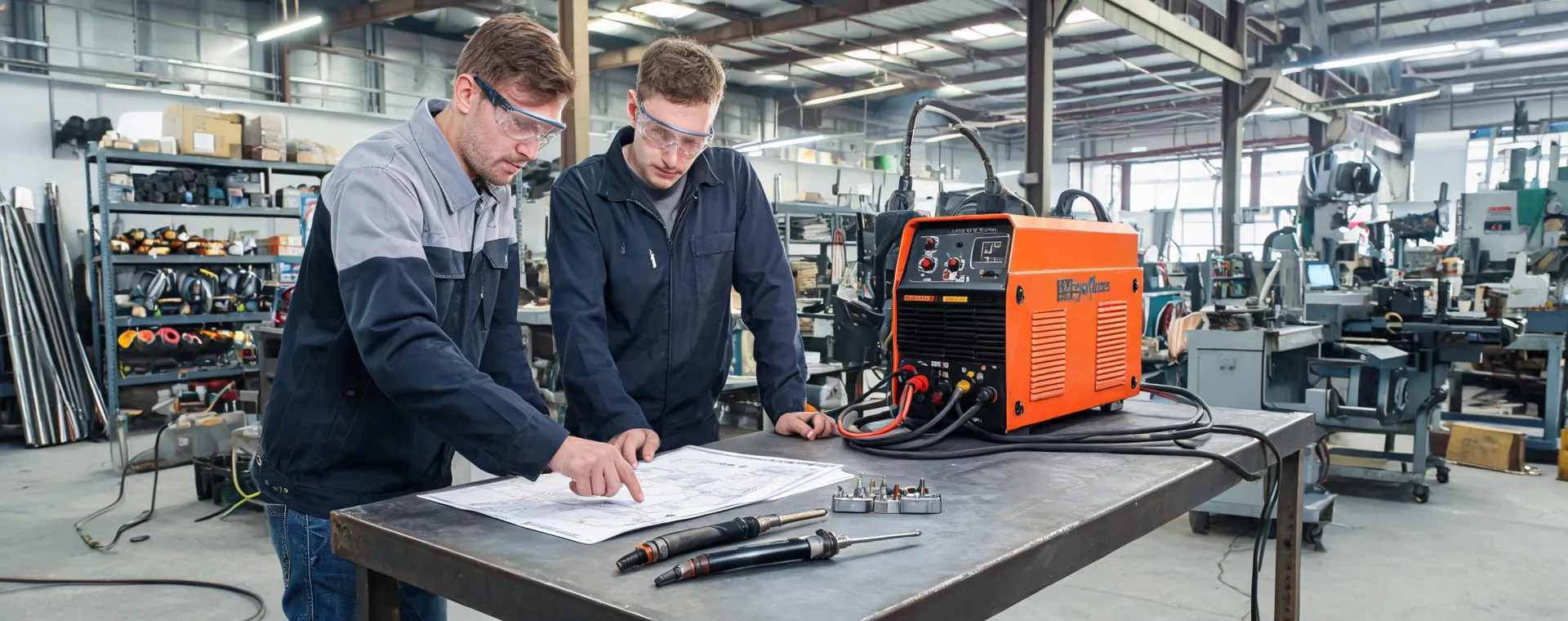
Industrial buyers often know the production problem before they know the exact machine family. This service path turns that problem into a practical welding equipment request by collecting material range, amperage expectations, torch access, shift pattern, operator skill and service location. The result is not a loose catalog conversation. It is a documented shortlist that connects process, accessories and dealer routing.
Kemppi planning is organized around the decisions that production teams must defend internally: whether the process fits the joint, whether the machine can sustain the duty cycle and whether the purchase package includes the accessories needed on day one. Each lane turns a technical question into a procurement-ready note.
MIG, TIG, MMA and plasma-adjacent requirements are reviewed against base metal, weld position, bead appearance and throughput so the machine family is chosen for the work, not for a familiar label.
Power source, feeder, torch length, cable set, grounding and control panel expectations are organized into one request so purchasing can compare useful machine packages.
The finished request is routed with application notes, product category, urgency and documentation needs so a dealer response can focus on machine fit rather than repeating discovery.
Material, thickness, joint type, position, shielding gas and production cadence are recorded in plain language.
Arc starts, heat input, spatter tolerance, bead appearance and operator adjustment range are weighted before product selection.
Power supply, bench layout, cable reach, feeder location and local service access are checked against the target machine type.
Category, process notes and approval requirements are prepared for quote review with fewer missing details.
That rule keeps equipment conversations grounded in the shop floor: stable wire feed, repeatable TIG starts, correct accessory reach, serviceable documentation and a product category that a buyer can validate. It also helps mixed teams speak the same language when engineering, purchasing and production all touch the decision.
Use the form to share the material, weld process and production target. The response can focus on the machine category and setup path that best fits your operation.